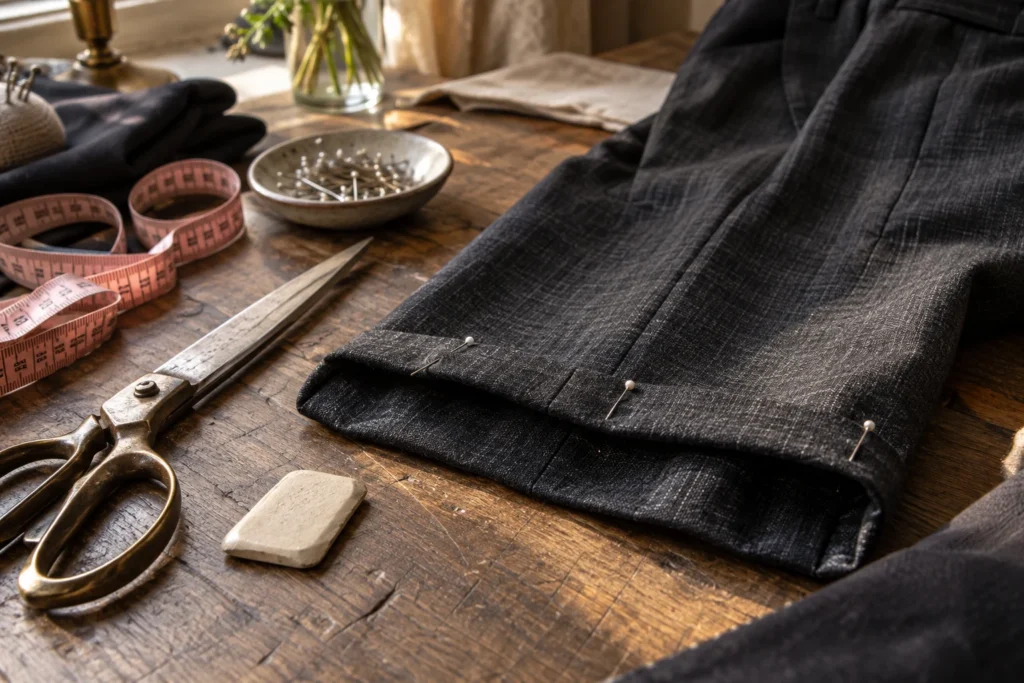
Before replacing a garment you almost love, find out whether a small alteration could make it useful. A trouser hem, sleeve length, loose button, or modest waistband adjustment may be the obstacle between an item hanging untouched and becoming part of your regular rotation.
A tailor can also tell you when a change is unlikely to produce the result you want. The first appointment is a conversation about feasibility, cost, and how you intend to wear the piece.
Describe the problem in everyday language
You do not need tailoring vocabulary. Say that the trousers drag with your flats, the jacket sleeve covers your hand, or the waist gaps when you sit. Explain what you want to be able to do comfortably.
Bring photographs if they clarify the desired shape, but expect the tailor to assess the actual garment. Its seams, lining, pockets, stretch, and available material affect what can be changed. A reference photograph cannot remove those limits.
Bring the shoes and layers
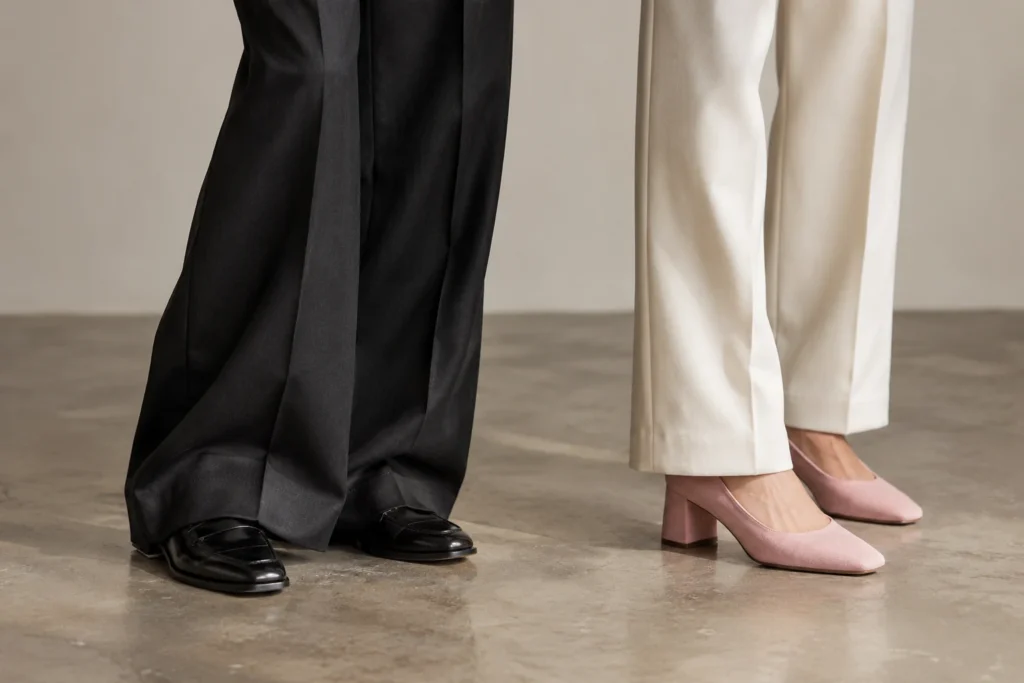
Wear or bring the shoes you plan to use with trousers or a long dress. Hem length depends on that pairing. For a jacket, bring a typical shirt or knit so the fit is checked over the right amount of clothing.
Include the undergarments you normally wear with a dress when appropriate. A fitting over a different base can lead to a result that feels wrong later. Comfort while seated matters as much as a tidy standing silhouette.

Ask four questions before agreeing
- What changes do you recommend, and which would you leave alone?
- Will the alteration affect the pockets, lining, or overall balance?
- What is the total estimated cost and expected completion date?
- Will there be another fitting before the work is finished?
For an event, explain the real deadline and allow room for a follow-up fitting. Avoid assuming a rushed alteration will be possible, especially when several parts of the garment need attention.
Start with one piece
If you are trying a new tailor, take one garment before bringing a whole closet. Choose an item with a clear, limited problem. That gives you a chance to see the communication, finish, and fit without making a large commitment.
Compare the alteration cost with the role the item could play. A well-loved jacket that will be worn often may justify more work than an inexpensive impulse purchase that still does not suit your life. Price alone cannot answer the question.
Check the finished garment in motion
Try it on before leaving. Sit, reach, walk, and check both sides in the mirror. Look at the hem, closures, and lining. If something still feels wrong, describe it clearly while the garment is on your body.
Keep a small note of what was changed and which shoes were used for the fitting. The next time you are deciding whether to replace a piece, you will have a practical reference for what an alteration can achieve.
Keep reading
- Trousers, Hems, and Shoes: A Practical Pairing Guide
- Ask Kim: What If the Size on the Label Keeps Changing?
Have a style question? Ask Kim, or join the conversation on Instagram.