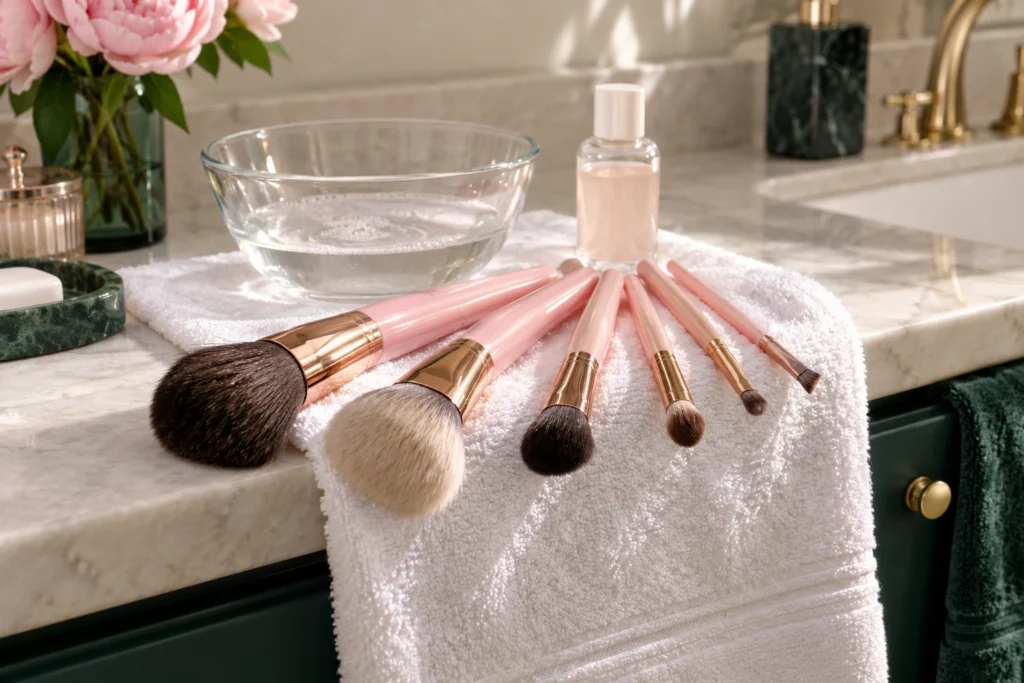
Makeup brush care becomes easier when it has a regular place in the week. Keep the working collection manageable, know which brushes are clean, and allow enough drying time before the next routine.
The American Academy of Dermatology recommends washing makeup brushes every seven to ten days. Its brush-cleaning guide is a useful starting point, alongside the care instructions for your particular tools.
Follow a gentle cleaning process
The AAD advises rinsing the bristle tips with lukewarm water, cleaning them with a gentle or clarifying shampoo mixture, and rinsing until the water is clear. Avoid soaking the whole brush head. Gently remove excess moisture, then dry brushes flat with the tips extending over a counter edge. Drying them upright can send water toward the handle and loosen the glue.
Use the linked guidance for the complete method and check any special instructions from the brush maker. Do not share brushes. If a product or tool appears to be causing a skin reaction, stop using it and seek advice from a qualified clinician.
Make room for drying
Choose a clean place where the brushes can remain undisturbed. Think about children, pets, splashes, and the space you need for other tasks. A drying setup should be stable and easy to leave alone.
Clean the brushes when you will not immediately need them again. If Sunday evening is always rushed, choose another point in the week. A routine that fits your schedule is more likely to happen consistently.
Keep clean and used tools distinct
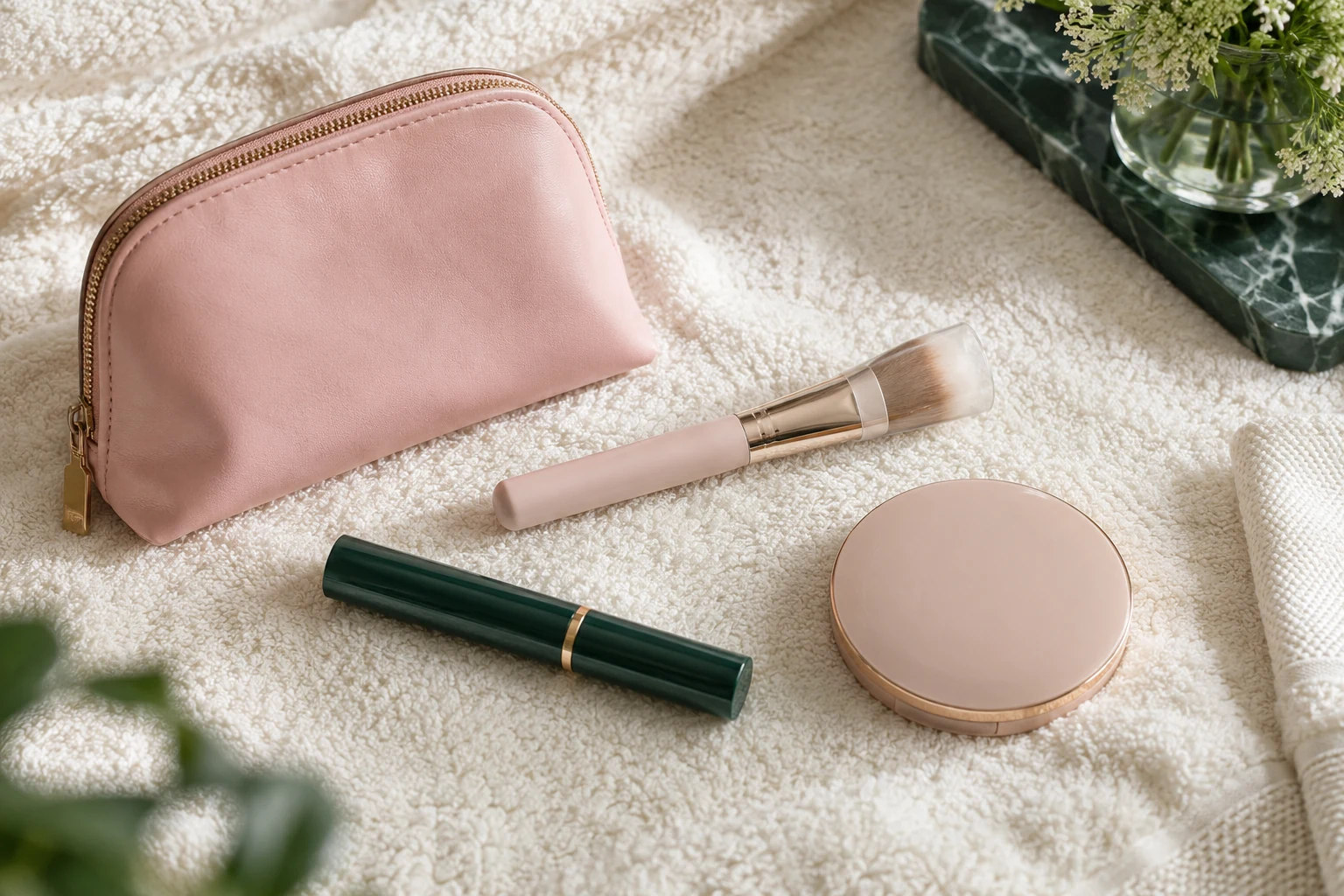
Give freshly dried brushes a clear home. A separate container or section of your storage can make their status obvious. Avoid putting them back into a pouch that needs cleaning.
You do not need a large duplicate collection. Start by identifying the few brushes you actually use and maintain those reliably. Tools that rarely leave the drawer can be stored separately so they do not crowd the daily routine.
Inspect while you organize
Notice loose handles, misshapen heads, or persistent damage and consult the maker’s guidance when deciding whether a tool should be replaced. Keep packaging information or a product note if it helps you identify the correct care method later.
If a brush no longer performs the job you need, do not automatically replace it with the same shape. Consider what you use it for and whether another tool you already own can serve that intended purpose.
Pair the task with a small beauty reset
While the brushes dry, review your everyday makeup tray, close lids, and put the products back in order. Keep the task contained so brush care does not become an all-day organization project.
A clean, ready collection makes the next routine simpler. The useful habit is consistent attention to a few tools, with enough space and time to care for them properly.
Keep reading
- Beauty Tips for a Makeup Bag Clean-Out You Will Actually Finish
- The Midday Beauty Edit: A Small Touch-Up Kit for a Full Day
Have a style question? Ask Kim, or join the conversation on Instagram.


