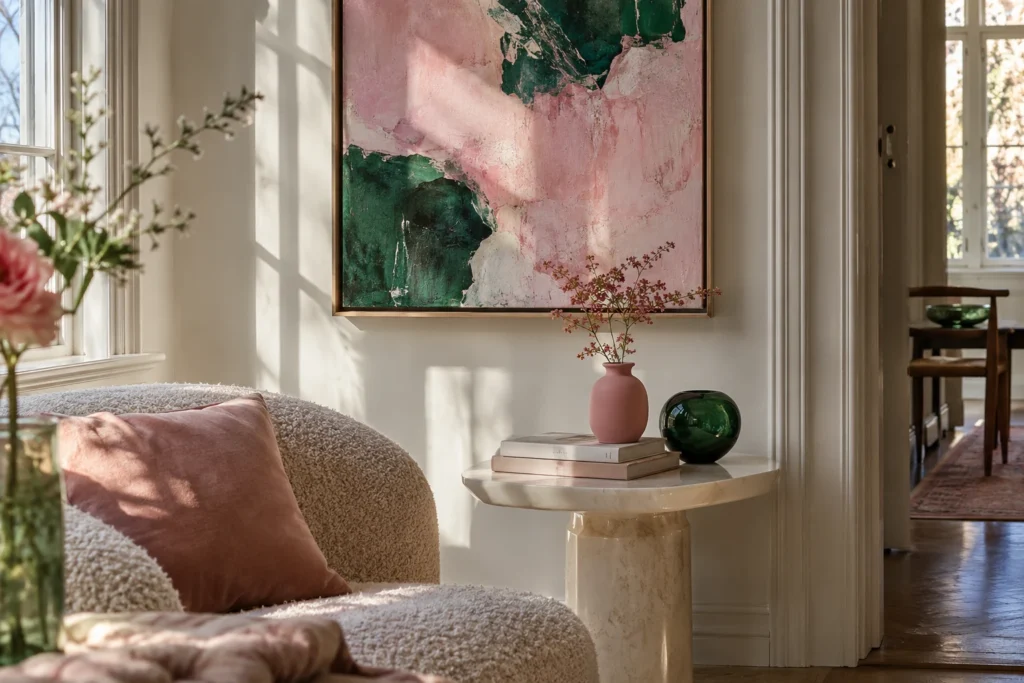
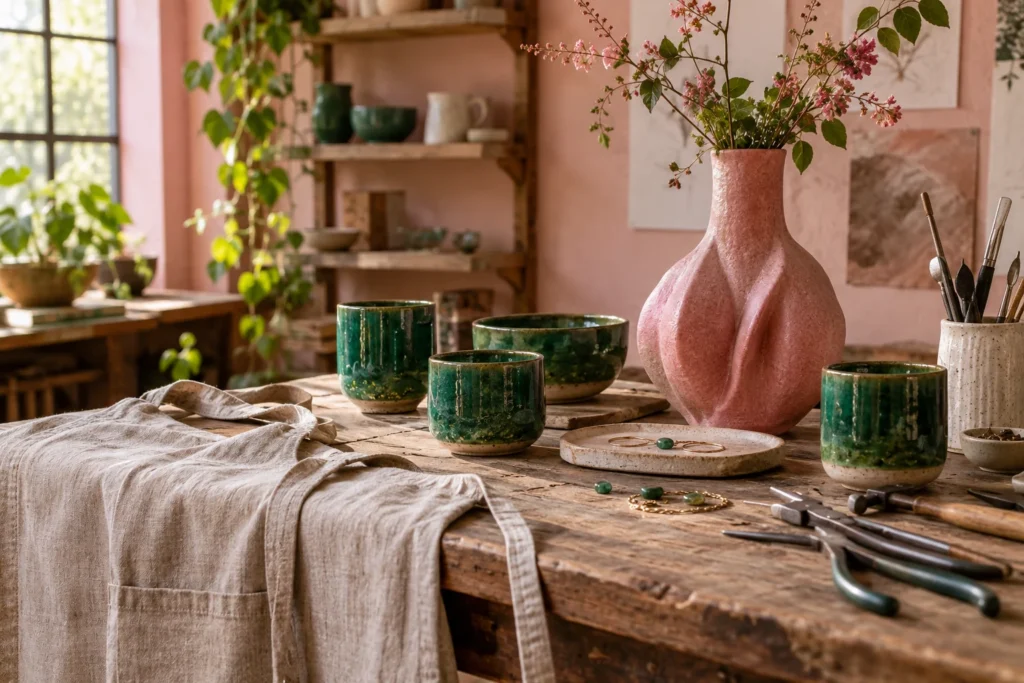
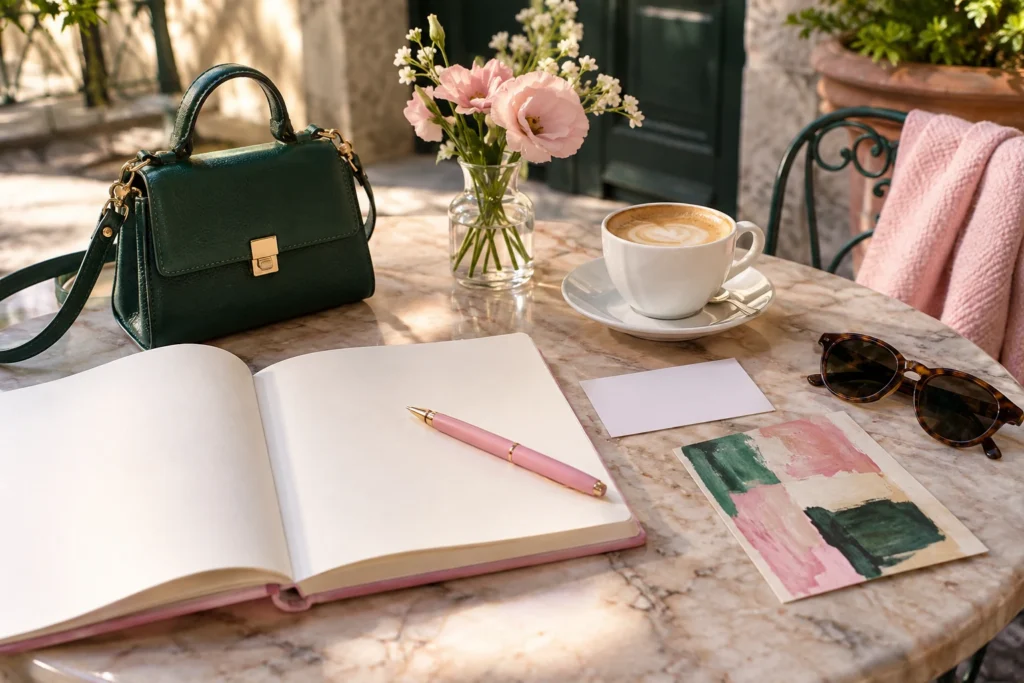
An artwork can suggest a new outfit without becoming a literal theme. Borrow one relationship you notice: a strong color against a quiet one, a small bright shape in a large dark field, or a repeated curve.
The goal is to translate an idea into clothes you enjoy wearing. Keep the artwork’s own meaning and context intact, and treat the outfit as your personal response.
Look for the largest color first
Identify the color that occupies the most space. Then notice the smaller color that changes its mood. In an abstract arrangement of ivory, pink, and emerald, the ivory might create room while pink carries the energy and green provides contrast.
Try the same roles in clothing: an ivory shirt and trousers, a pink jacket, and a small green bag. You are borrowing the balance rather than attempting an exact match.
Change the proportions
An artwork may use a tiny accent that becomes powerful because everything around it is quiet. Translate that into an earring, scarf, or shoe. You do not need a full garment in every color you see.
If the outfit feels too busy, reduce one color’s area. If it feels too quiet, make the accent more visible. Use the mirror to judge the clothing as its own composition rather than treating the painting as an instruction sheet.
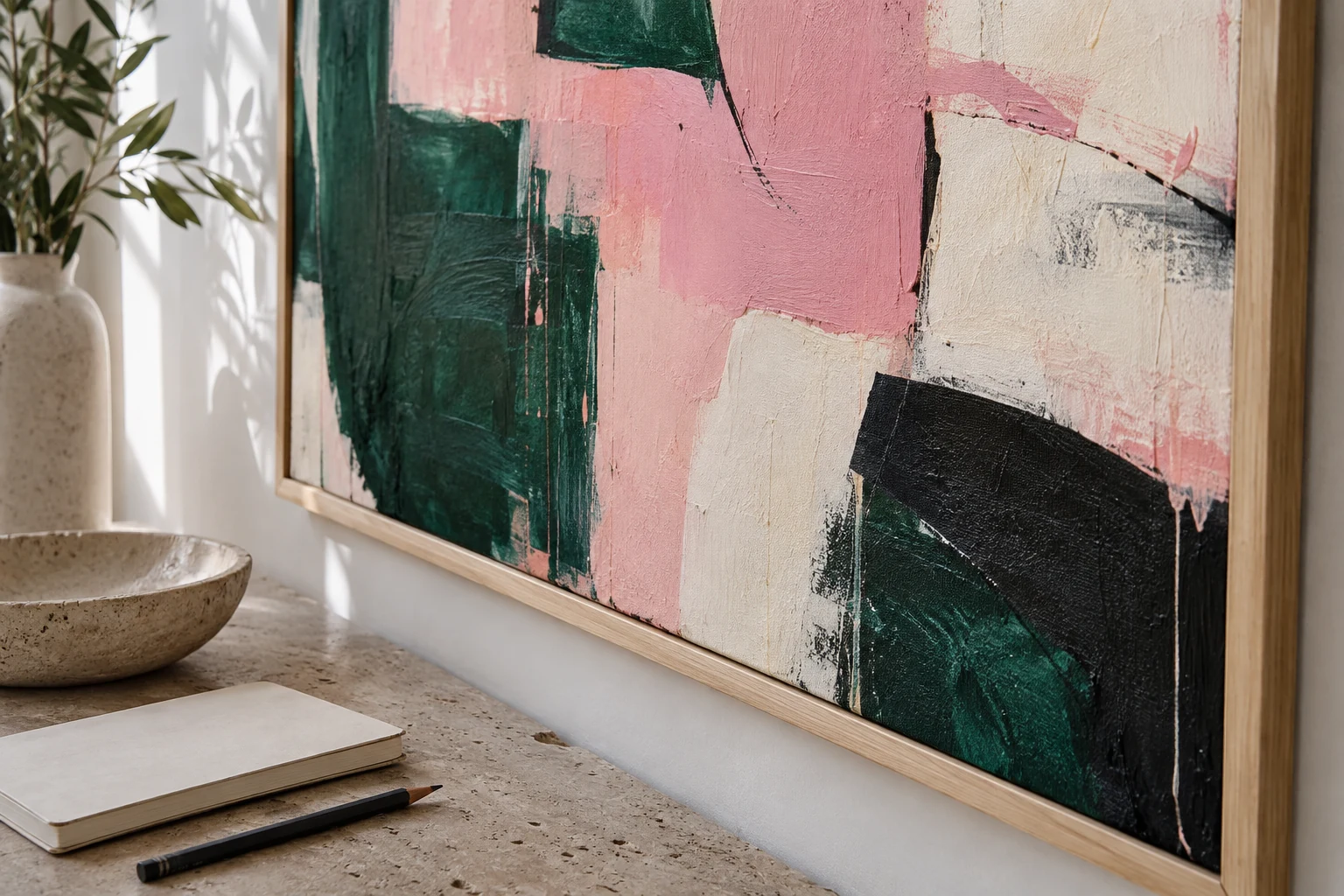
Borrow a shape as well as a color
A rounded form might suggest a curved bag or sculptural earring. A sharp diagonal may prompt you to try an asymmetric neckline or a scarf arranged at an angle. Keep the choice comfortable and connected to pieces you already own.
Texture can offer another starting point. A contrast between smooth and rough surfaces might become a crisp shirt beside a soft knit. The translation can be subtle enough that only you know where the idea began.
Record the source accurately
If you share the inspiration online, name the artist and work when you know them and link to the museum or artist’s page. Follow the source’s rules for image use. A credit and link can help someone discover the art that interested you.
Avoid reducing a culturally significant object to a decorative motif without learning its context. You can appreciate a color relationship while also taking time to understand what you are looking at.
Make a three-piece experiment
Choose one top, one bottom, and one accessory from your closet. Give each a role inspired by the work. Wear the combination for a normal part of your week and notice whether the idea still feels good in motion.
Art can make you more attentive to what is already around you. That attention may be the most useful thing to bring back to your wardrobe: a new way of seeing familiar colors, shapes, and details.
Keep reading
- Pink + Emerald: A Color Formula You Can Wear on a Tuesday
- Style a Small Art Corner with Pieces You Already Love
Have a style question? Ask Kim, or join the conversation on Instagram.