The style question: An invitation says “smart casual.” What does that mean for this particular event?
Use the phrase as a prompt to gather context. The host, venue, time, activity, and local expectations matter more than a universal outfit formula. If the invitation leaves you unsure, ask a brief, specific question.
Read the whole invitation
Look for the location, start time, indoor or outdoor setting, and what you will be doing. A seated work dinner, a gallery gathering, and an afternoon celebration may use the same phrase while expecting different levels of dress.
Check any guidance supplied by the host. Photographs of past events may offer context, but they should not overrule current instructions or make you feel obliged to copy another person’s outfit.
Ask a question that is easy to answer
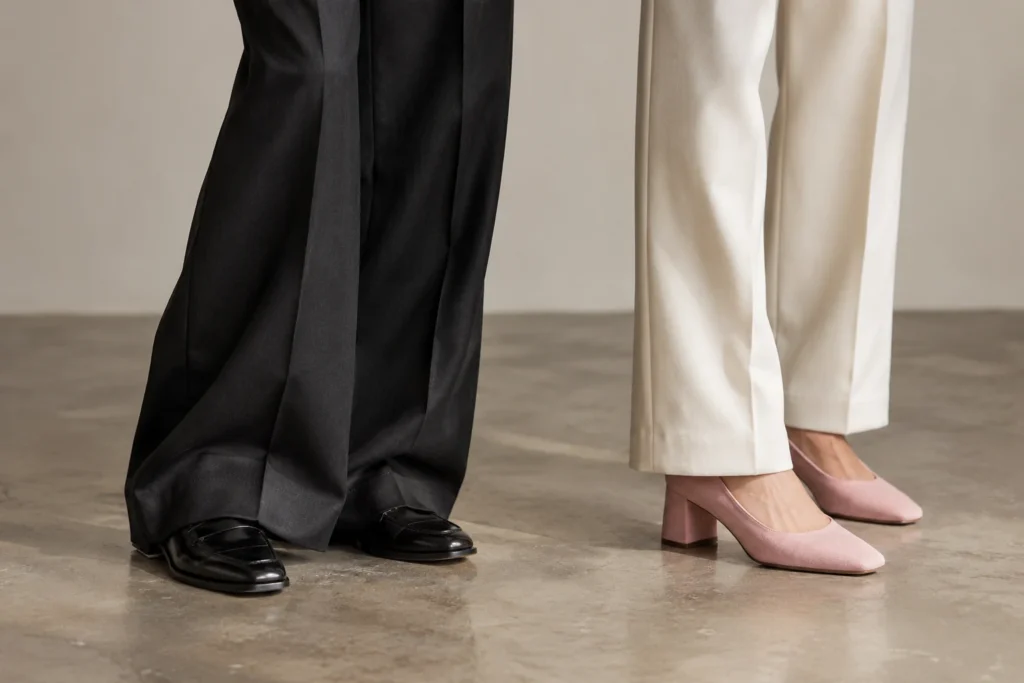
Instead of asking what everyone is wearing, ask whether tailored trousers and a blouse would suit the event, or whether polished dark jeans are appropriate. A concrete option gives the host something clear to respond to.
You can also ask about practical conditions: will there be outdoor walking, standing for long periods, or a change of venue? These details affect the shoes and layer as much as the level of formality.

Build a polished but comfortable base
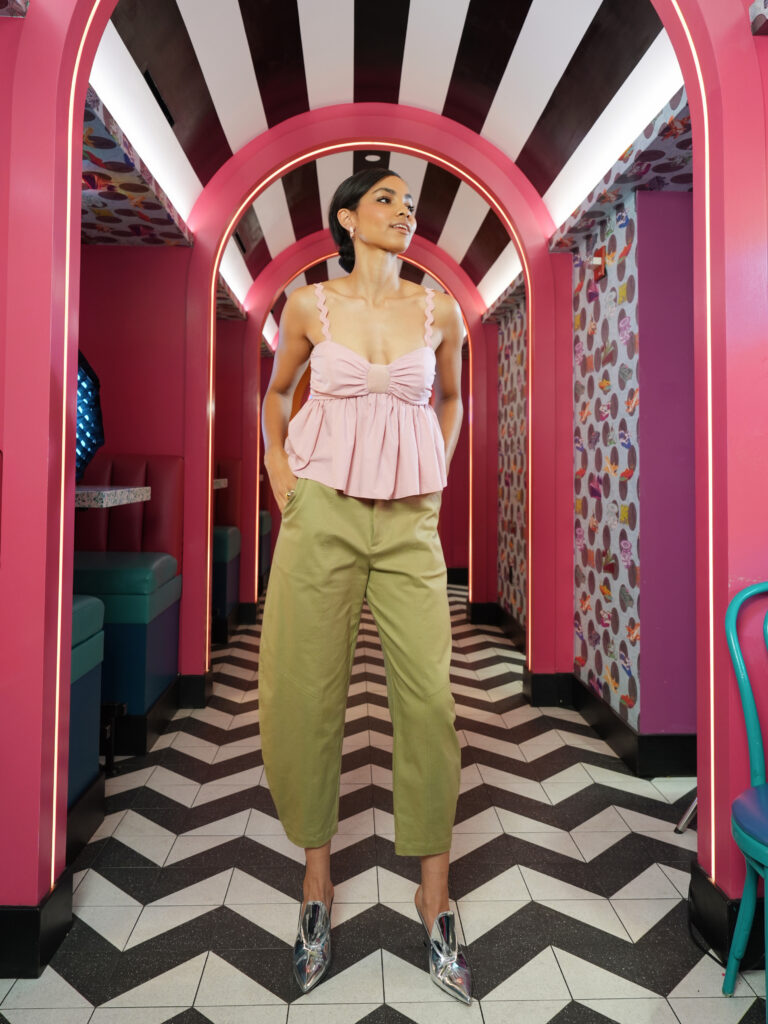
Once the context is clear, consider trousers with a well-fitting top, a simple dress, or dark jeans with a tailored layer if the host confirms they fit the setting. Choose pieces in good condition and shoes suited to the route.
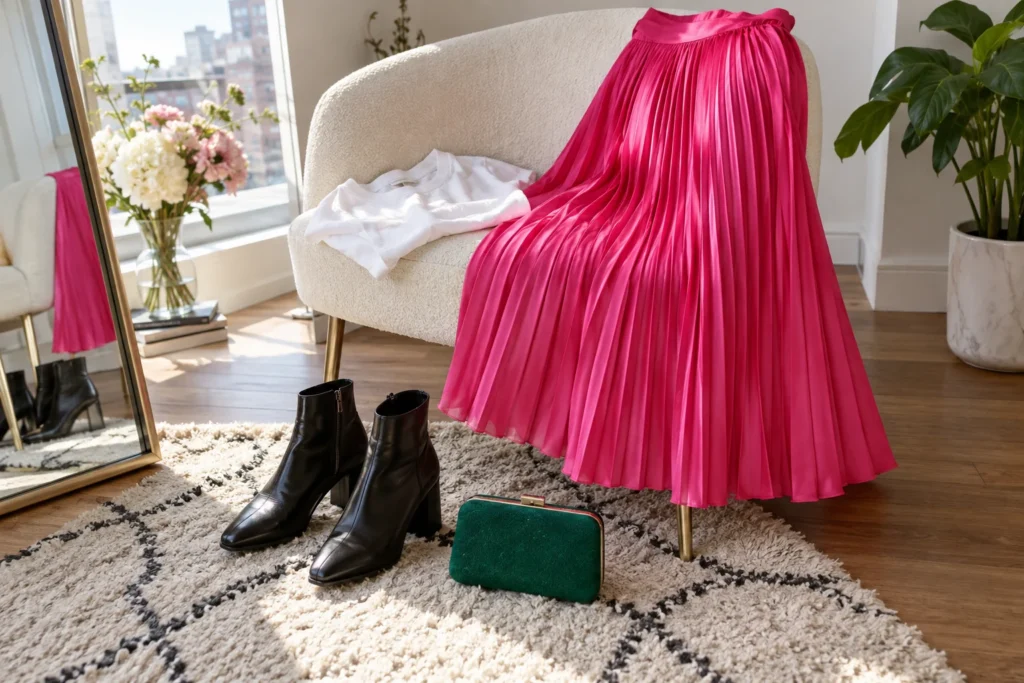
A pink or emerald jacket can bring personality to a quiet base. Keep the rest of the outfit clear enough that the color feels intentional. There is no need to make every element more formal than your usual style.
Use the details to adjust the level
A structured bag, refined shoe, or considered earring can make a relaxed base feel more finished. A casual tee or sneaker may change the impression in the other direction. Judge the complete outfit rather than treating one item as a guarantee of appropriateness.
Try the look seated and with the outer layer removed. If you will spend most of the event without the jacket, the clothing underneath needs to work on its own.
Prepare one flexible option
If the setting remains slightly uncertain, a removable layer can provide flexibility. Choose an outfit you can wear comfortably as the evening develops, rather than packing several alternatives that create more decisions.
The most useful style confidence comes from preparation and context. Once you understand the event and have a workable outfit, you can arrive ready to pay attention to the people rather than monitor your clothes all evening.
Keep reading
- One Blazer, Three Stops: Meeting, Lunch, and Dinner
- Casual Style for a Day That Starts with Errands and Ends at Brunch
Have a style question? Ask Kim, or join the conversation on Instagram.