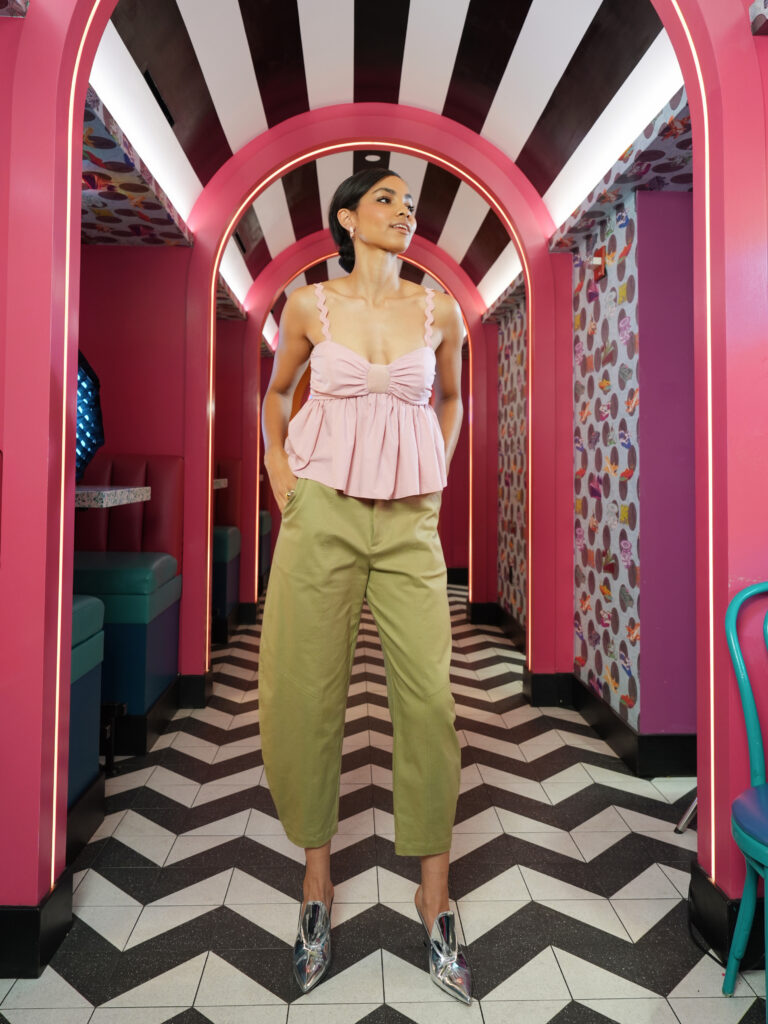
Volume is one of the most useful styling tools because it changes the outline of an outfit before color or accessories enter the picture. Wide trousers, a boxy jacket, a full skirt, and a close-fitting knit each create a different relationship between shape and movement.
There is no single proportion every woman needs to follow. The useful goal is an outfit that feels deliberate, comfortable, and suited to the day.
Choose the area with the most volume
Start with one piece you want to wear: perhaps wide-leg trousers or a generous shirt. Add a second piece with a clearer edge. Wide trousers with a shorter jacket create an obvious change in length. A loose shirt with straight jeans gives the eye a calmer line below.
This is a starting formula, not a ban on wearing loose pieces together. A roomy shirt and wide trousers can look excellent when their lengths, material weight, and shoes are considered as a whole.
Find the visible stopping points
Look at where the jacket, shirt, skirt, and trouser hems fall. Several hems stopping close together can make an outfit look busy. Moving one edge can help: tuck a shirt, shorten a sleeve with a neat fold, or try a different jacket length.
A tuck does not have to be tight or complete. A small front tuck can show where the top ends while leaving room around the body. If you dislike tucking, choose a top whose length already creates the line you want.
Consider how the material moves
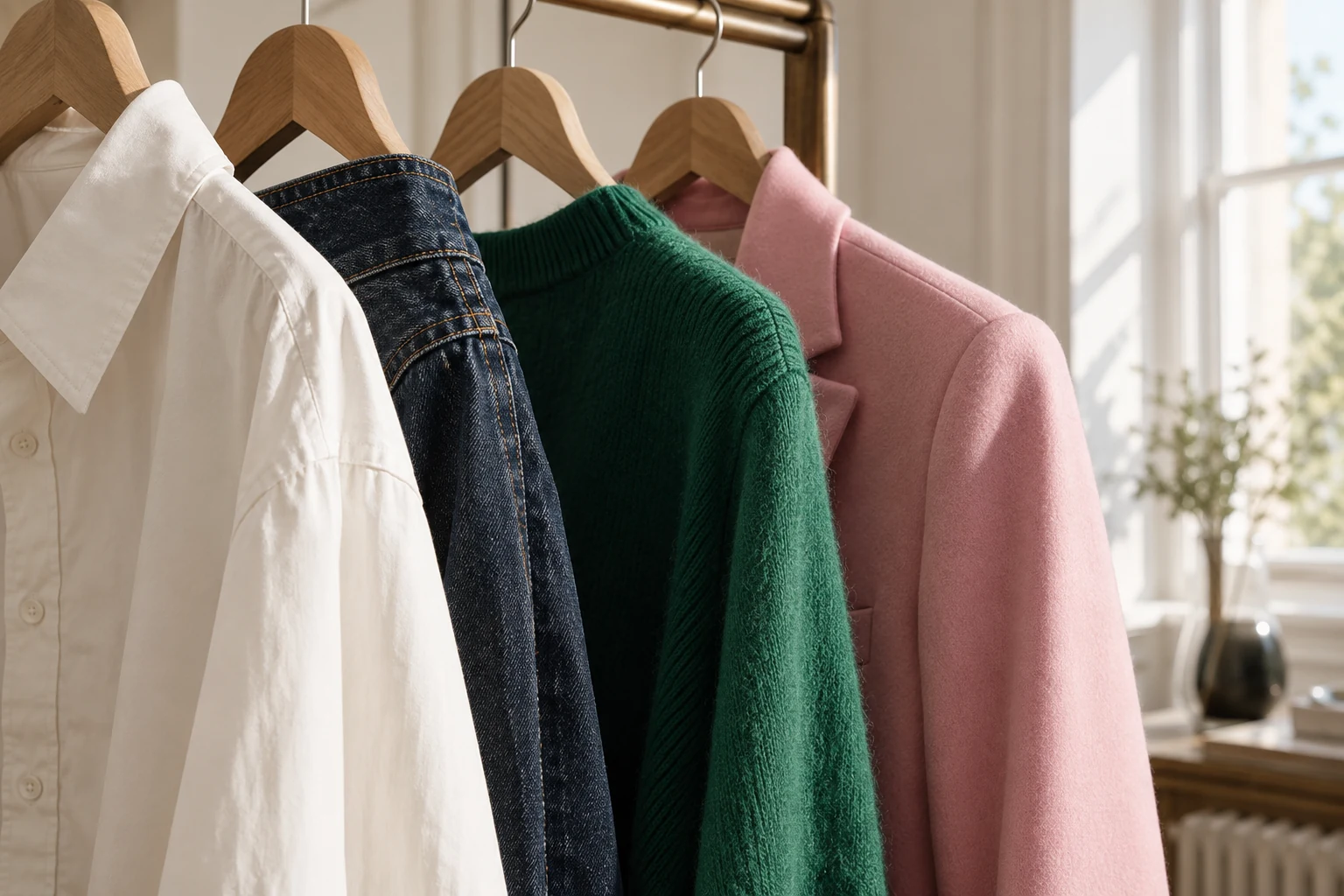
A wide trouser in a fluid cloth falls differently from the same width in stiff denim. A bulky knit adds more volume than a lightweight shirt. Assess the garment in motion, rather than only on a hanger.
Walk, sit, reach, and turn in front of the mirror. A piece that looks dramatic standing still may bunch or pull when you move. The best proportion is one that remains workable through the activities you actually do.
Use shoes as part of the silhouette
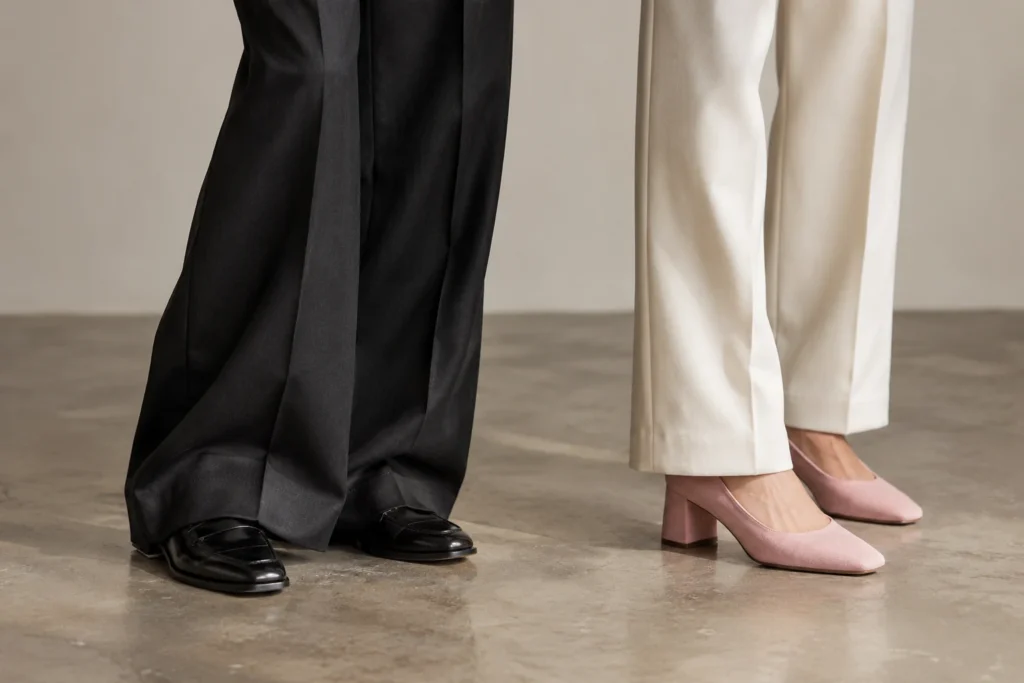
A substantial shoe can give a full trouser a clear finish. A slim flat may create a lighter effect. Neither requires a heel. Check that the hem clears the ground safely and that the shoe is visible to the degree you want.
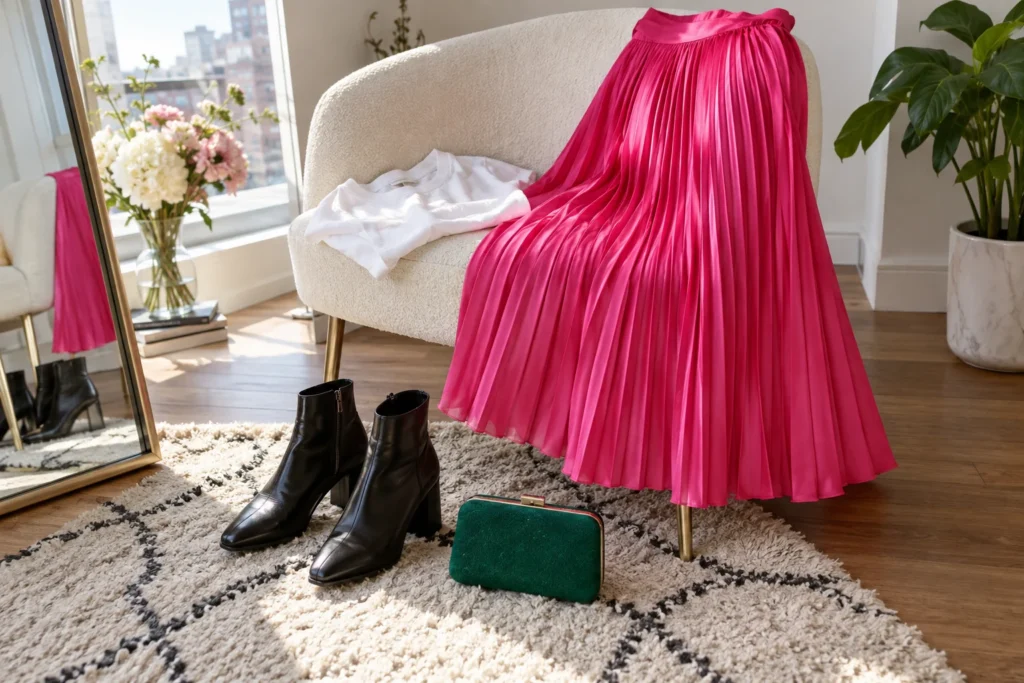
With a full skirt, try both a close-fitting top and a loose shirt. Keep the shoes the same for the comparison. Changing one variable at a time makes it easier to see what is helping.
Make a two-outfit comparison
Photograph the same main piece in two combinations. Compare the overall outline first, then the details. Ask which version feels more like you and which would be easier to wear for several hours.
Save the stronger combination, including a note about the shoes and any sleeve adjustment. Over time, those real examples become your own proportion guide, based on your body and your preferences.
Keep reading
Have a style question? Ask Kim, or join the conversation on Instagram.