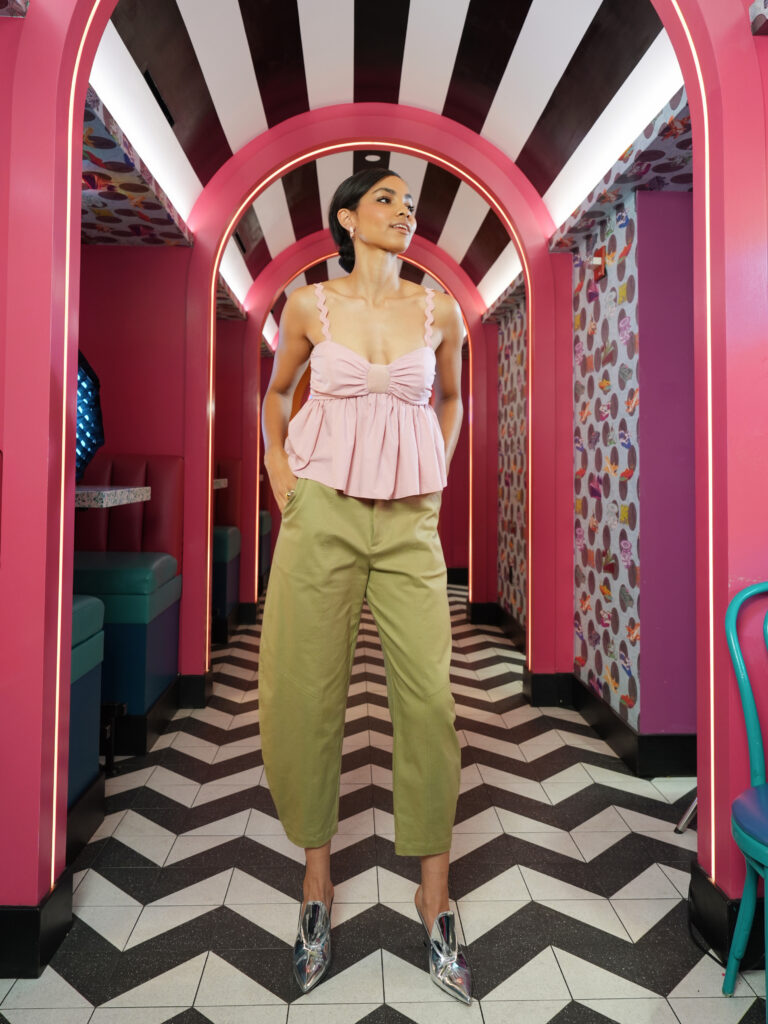
An on-camera outfit should help you stay comfortable and keep the audience’s attention on the conversation. Preparation begins with the production details: the setting, camera frame, microphone, and whether you will be seated, standing, or moving.
Ask the producer or organizer for any wardrobe guidance. The needs of a studio interview, remote appearance, and live demonstration can differ.
Find out what will be in the frame
Ask about the background, seating, and expected shot. A close interview may emphasize the neckline and shoulders, while a demonstration can show the whole outfit. Dress fully for the activity even if you expect a tight frame.
If a production uses a colored background or special screen, follow its wardrobe instructions. Do not assume a favorite color will work in every setup. A backup top or layer can be useful when the production requests one.
Check the outfit while speaking
Sit or stand as you will during the appearance and practice a short answer aloud. Notice how your sleeves, neckline, and jewelry move when you gesture. Choose pieces that let you speak naturally without repeated adjustment.
For a clip microphone, ask the crew what attachment point and clothing arrangement they need. Keep necklaces, scarves, and hair from interfering with the microphone as directed. Avoid making technical assumptions before the crew checks the setup.

Test patterns and reflections
Inspect the camera preview when available. Some fine patterns or shiny surfaces may look distracting in a particular setup. The preview is more useful than a blanket rule that every print or every dark color is unsuitable.
Check jewelry for sound as well as appearance. A bracelet that taps the table or earrings that touch the microphone can become a distraction. Use the production’s audio check to catch those problems.
Prepare the practical kit
Bring the approved outfit ready to wear, a lint roller, a small touch-up kit, and any requested alternative. Keep the kit manageable and easy to find. Allow enough arrival time for the production’s preparation process.
For a remote appearance, check your camera position, lighting, connection, and sound before the scheduled start. Keep your notes where you can use them without constantly looking away from the conversation.
Make room for the message
Once the wardrobe is settled, rehearse the main point you want the audience to understand. Prepare a concise explanation and a concrete example. Clothing can support your presence, but clear answers give the appearance its value.
Afterward, note what felt comfortable and what you would change. A reliable on-camera outfit can be used again with a different layer or color detail. For support with media preparation and the story behind an appearance, visit the Kimberly West Agency.
Keep reading
- Office Style for a Video Meeting: Start with the Camera Frame
- Makeup Tips for Photos: Check the Light Before Adding More
Have a style question? Ask Kim, or join the conversation on Instagram.