Twenty minutes can be enough to make the coming week’s wardrobe easier to use. Keep the task narrow: check the calendar, choose a few outfits, and remove the small obstacles that tend to cause a rushed morning.
This is a suggested time box, not a promise that every wardrobe problem can be solved in twenty minutes. Start with the part that will make the biggest difference to your week.
Minutes 1 to 4: read the week
Look at meetings, travel, appointments, social plans, and the weather. Identify the days with unusual requirements. A presentation, an outdoor event, and a long commute may need more preparation than a familiar day at home.
Choose the most demanding day first. Once that outfit is settled, the rest of the week often becomes easier to plan. Include the layer and shoes, rather than deciding only on a top.
Minutes 5 to 10: build three dependable outfits
Start with clean clothes that fit comfortably now. Put together three complete combinations and keep them visible. They can be flexible starting points rather than rigid assignments to specific days.
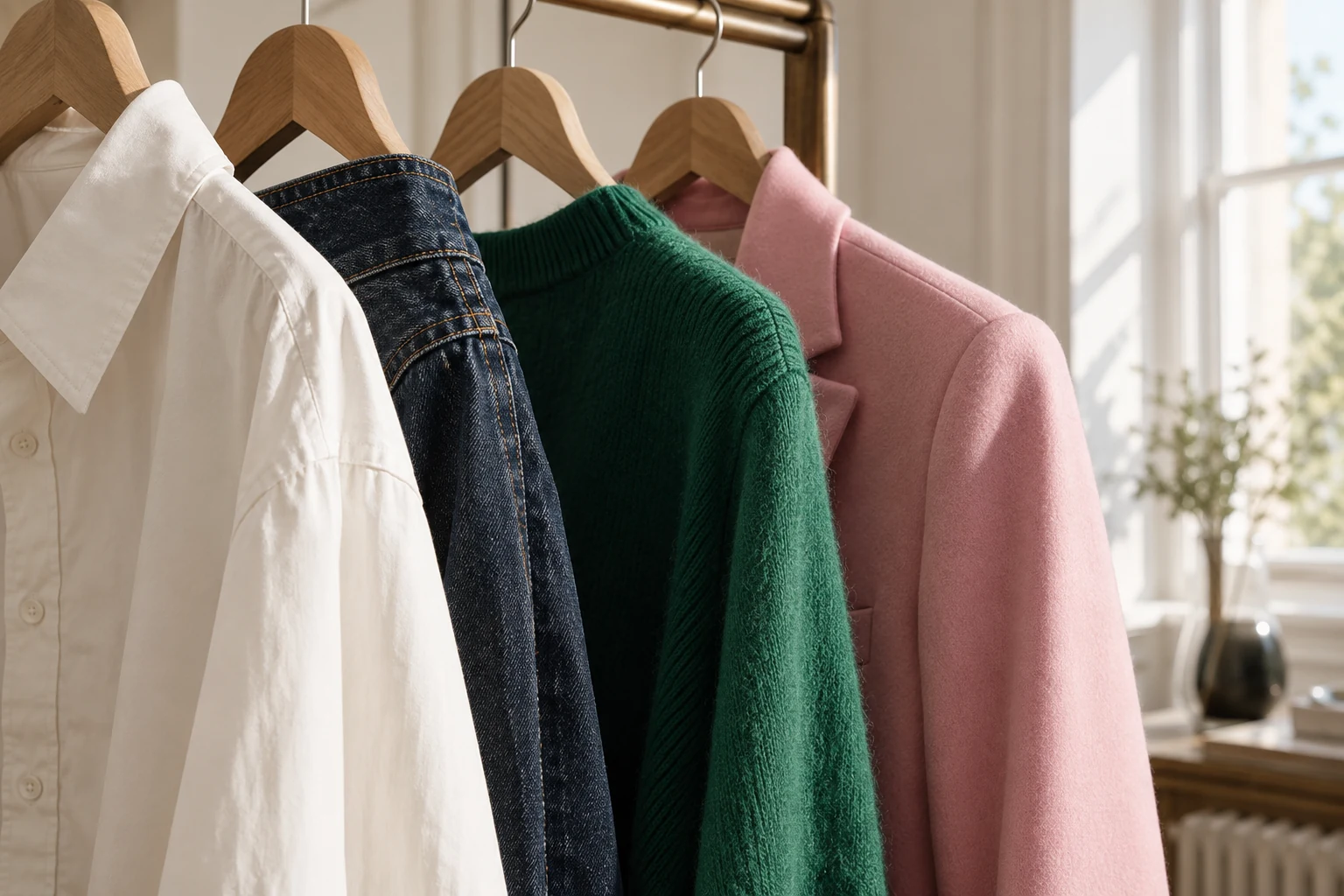
Use one color or layer more than once if it helps. A pink blazer might work over a dress and with trousers; an emerald knit could pair with denim and a skirt. Repetition is useful when the combinations feel good.
Minutes 11 to 15: remove the friction
Check for missing buttons, a dragging hem, lint, or shoes that need attention. Set aside items needing repairs and choose a ready alternative for this week. Do not let the reset become an ambitious alteration project.
Follow care labels for cleaning and pressing. If a piece will not be ready in time, take it out of the plan now. A wardrobe system is only helpful when it reflects the clothes that are actually available.
Minutes 16 to 20: prepare the supporting items
Empty the work bag, return essentials to their usual places, and add only what the next day requires. Put the chosen accessories with the outfit. Locate the shoes and check that both are ready to wear.
Take a quick photo of a combination you want to remember. If you prefer a written note, keep it brief: black trousers, ivory shirt, pink jacket, loafers. The record should save time rather than become another task to maintain.
Leave space for a change of mind
Weather, plans, and mood can shift. Treat the prepared outfits as options you can adapt. If you wake up wanting a different color, change one part and keep the useful structure.
At the end of the week, note the outfit that required the least effort and felt most like you. Keep it in the rotation. A small repeatable reset can gradually build a wardrobe that supports your days with less searching and fewer last-minute decisions.
Keep reading
Have a style question? Ask Kim, or join the conversation on Instagram.